contribution
Hideyuki Kasuga, Representative Director of hide kasuga 1896 Co., Ltd., has contributed an article to the Shinano Mainichi Shimbun regarding "Reiwa Modernism," a new lifestyle concept he advocates for at
.
-----
The Dawn of Reiwa Modernism
Hideyuki Kasuga
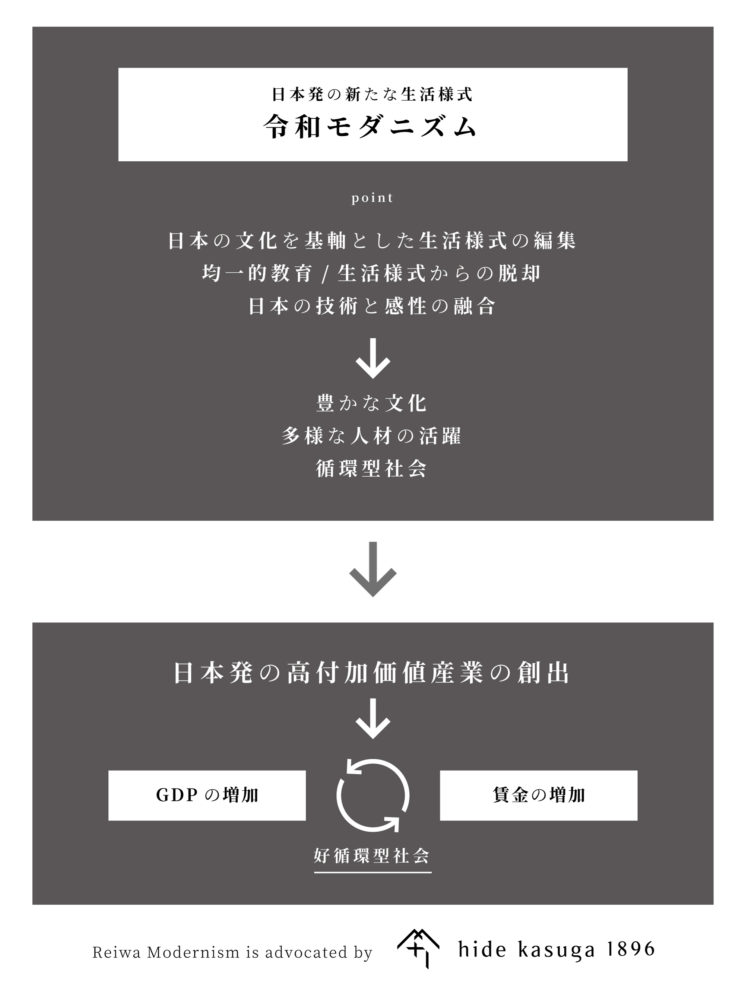
Guided by its corporate philosophy of “creating and revitalizing value,” the Hide Kasuga Group provides value across all aspects of lifestyle with a focus on materials. With the aim of creating high-value-added industries originating in Japan, the group advocates for a new lifestyle called “Reiwa Modernism.”
Reiwa Modernism is a new lifestyle that blends the old and the new, created with the Japanese people at its core.
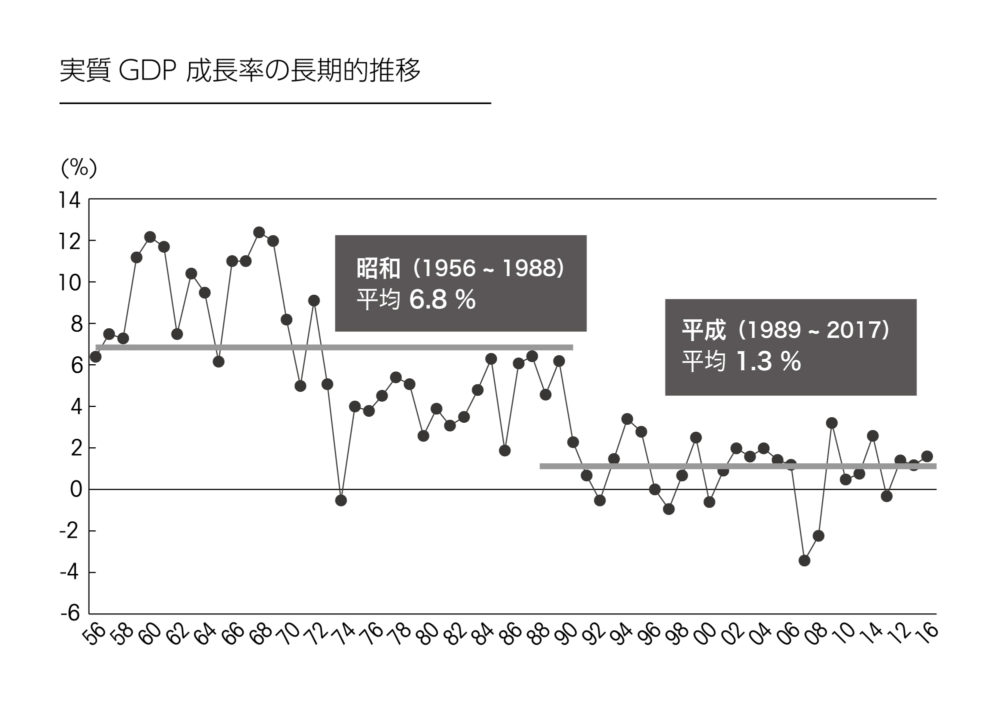
Post-war Japan achieved dramatic economic growth by aiming for a uniform lifestyle—the "100 million middle class"—through standardized education, centralized hiring, and lifetime employment, which mass-produced high-quality "salarymen."
By the time the bubble economy of the 1980s arrived, Japan had become one of the world’s leading industrial powers; it is no exaggeration to say that this strong economy was built on the foundation of a uniform lifestyle driven by these uniform salarymen.On the other hand, however, this led to the formation of a society lacking individuality, where people with strong personalities and leaders found it difficult to thrive. Companies that represent Japan—such as Sony and Honda, founded during the postwar boom—achieved their growth through the contributions of individuals with strong personalities who had been raised amid the prewar educational system and significant disparities between the rich and the poor.However, with the collapse of the bubble economy in the early 1990s, the Japanese economy began to decline. The era of low growth known as the “Lost 30 Years” was driven by the fact that the uniform workforce and standardized lifestyles of the postwar era were unable to foster high-value-added creative industries.
Then, in the 2020s, the COVID-19 pandemic drastically transformed the lifestyles of people around the world. While opportunities for face-to-face communication have plummeted and online business has become the norm, this has also created difficulties in discerning the expression of human emotions and other subtle nuances.
In Japan, staggered commuting and remote work—practices that had not previously taken hold—are beginning to become established. There is a shift from company-led management to self-management, and from time-based evaluations to performance-based evaluations.
I am convinced that breaking away from uniform human resource development and traditional lifestyles is an absolutely essential condition for Japan’s growth. Although Japan learned politics, economics, and culture from Europe before the war and was greatly influenced by American lifestyles and culture after the war, I strongly believe that now is the time for the Japanese people to take the initiative and create unique lifestyles and educational approaches that align with Japanese culture and historical perspectives.
As we enter the new Reiwa era and have experienced the COVID-19 pandemic, there is a growing need to build a lifestyle that emphasizes coexistence with the environment and a circular economy.
We must reaffirm that humans are part of nature and build a lifestyle based on coexistence with nature.The unique sensibilities and aesthetic sensibilities possessed by the Japanese people have continued to captivate people around the world in the fields of architecture and art. Furthermore, the habit of cherishing possessions is deeply ingrained in the Japanese spirit; we use quality items for a long time, minimize waste, and possess the foundation for a system that recycles goods.
Moving forward, we aim to build a circular society that blends the old and the new by introducing new technologies and systems into society based on the Japanese people’s circular lifestyle habits.
Furthermore, building upon this social foundation, we aim to establish an educational environment that nurtures individuals’ innate qualities and personalities, embrace diversity, and create a new lifestyle centered on the Japanese people.
“Reiwa Modernism” is a unique lifestyle that fuses the advanced “technical capabilities” cultivated as a nation of science and technology with the “sensibility” nurtured by history and culture.
The time has come for Japan to transform from a manufacturing powerhouse into a powerhouse of innovation, and to do so, we must start by changing our way of life.